
Dev.Project
Exploring how developers could discover, discuss and share technical knowledge without the noise of general-purpose social platforms.
Product Design
Research
UX/UI
Developers already use several platforms to do what could happen in one ecosystem.
GitHub is built around code, Stack Overflow around questions, Reddit around discussion, while DEV and Twitter/X support discovery and professional identity. The problem wasn't that these platforms were bad. It was that developers constantly moved between them depending on what they wanted to accomplish.
The question became: Could one environment connect these behaviours without becoming another noisy social network?

I designed around three principles: technical value, communities and minimal distraction.
The product needed to feel social without becoming engagement-driven.
So I prioritised content before popularity, created communities, and kept the interface focused on helping developers discover and exchange useful information.
I looked at where developers already go to understand what was missing.
I compared GitHub, Stack Overflow, Reddit, Twitter/X and DEV across discovery, discussion, identity and community. I also used conversations with developers in my network and Reddit discussions as informal signals.
The research suggested an opportunity, but it wasn't enough to validate demand so I treated the findings as hypotheses rather than facts.
The feed was designed for technical discovery, not engagement for its own sake.
A typical social feed can reward whatever generates the most reactions. For a developer-focused product, I wanted usefulness to have more weight. The feed brought together posts, followed topics, technical discussions and suggested communities so users could discover relevant information without relying entirely on popularity.
Why? The value of a developer network should come from what developers can learn and contribute, not simply what gets the most engagement.

Developers don't just consume knowledge; they build relationships around it.
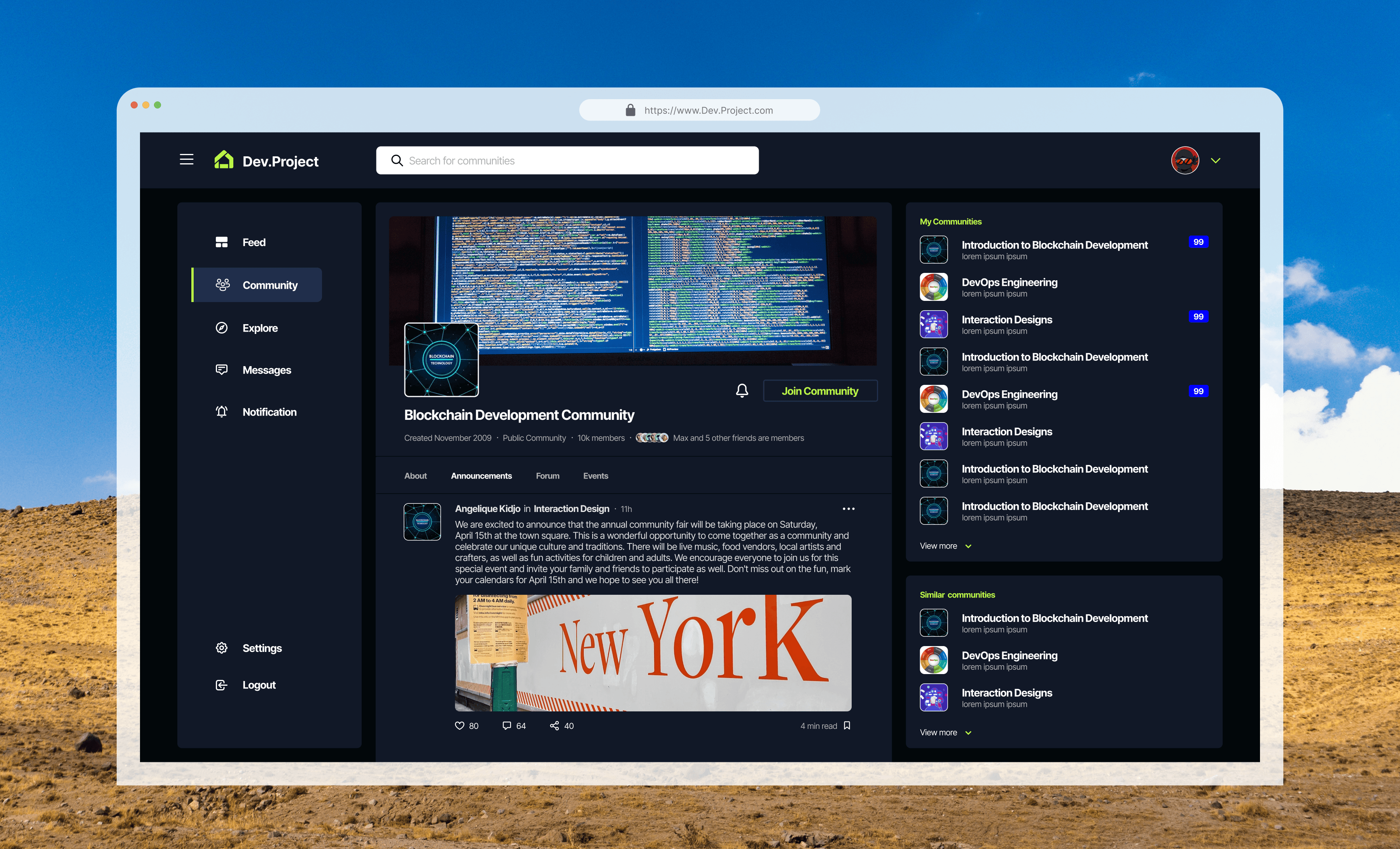
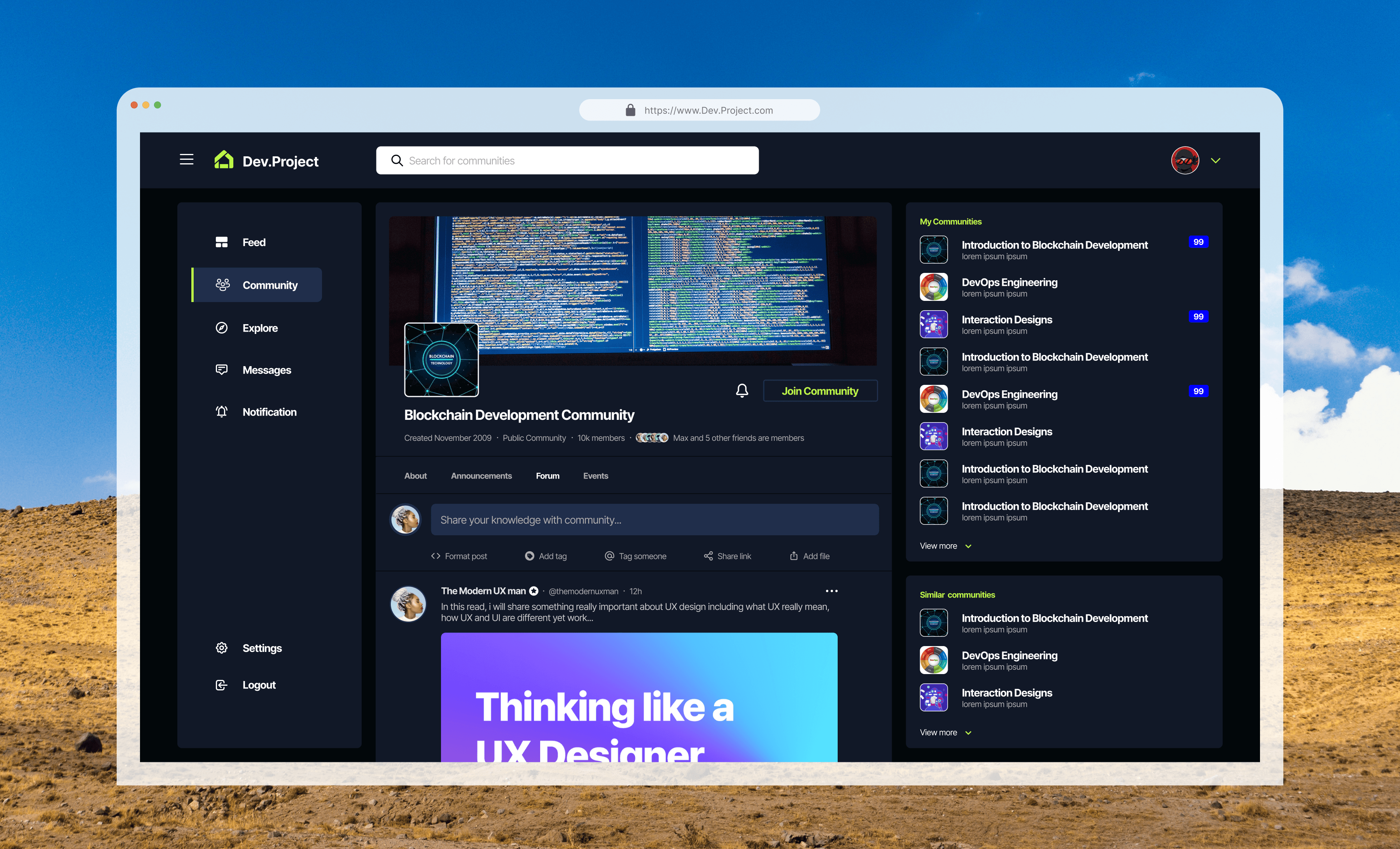
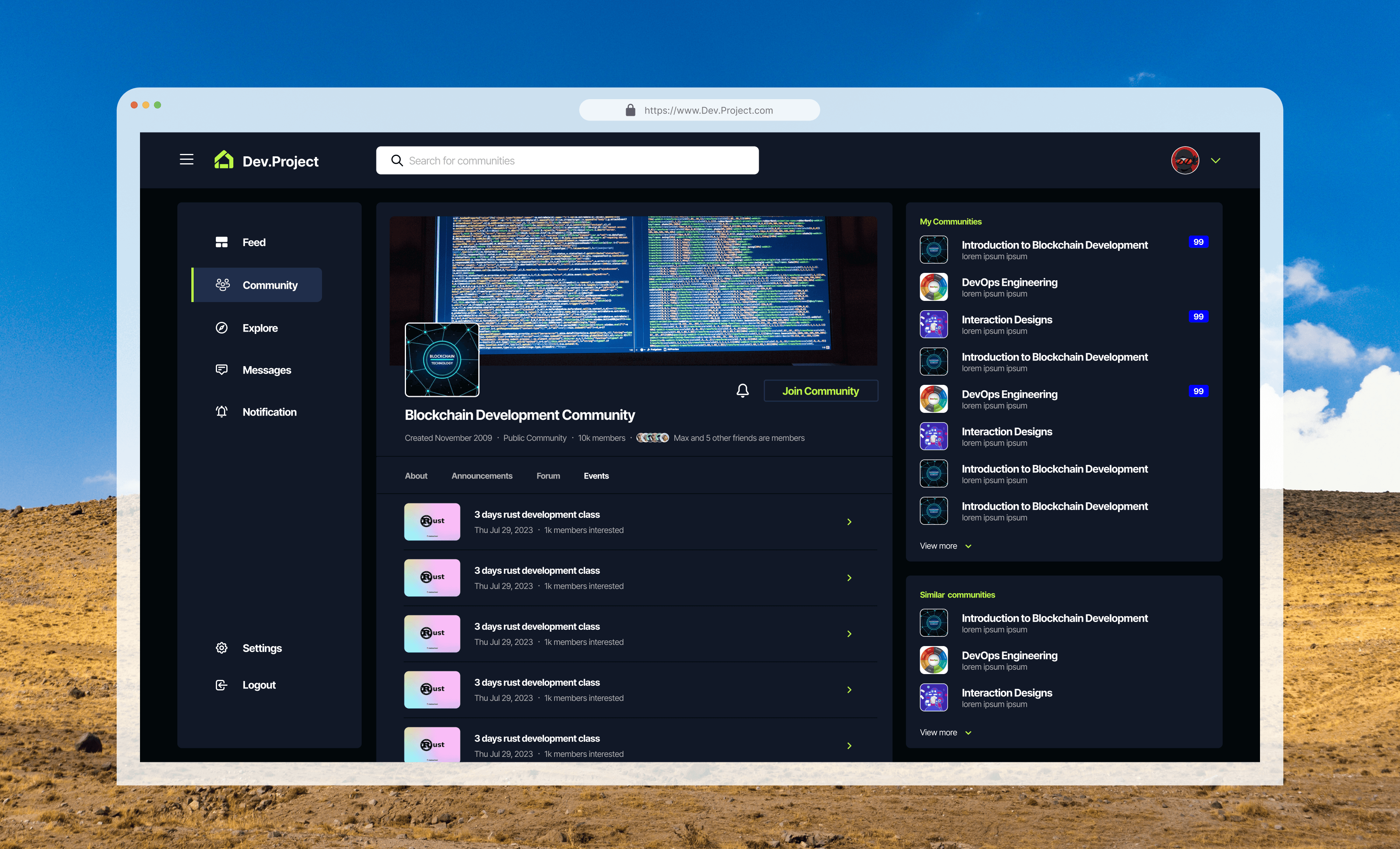
Communities is a core product surface. Each community had dedicated spaces for information, announcements, discussions and events, giving technical conversations more structure than a generic feed.
Why? A feed is good for discovery, but communities give people a reason to keep returning.


Technical knowledge should be discoverable from wherever the user starts.
Explore allowed users to search across people, communities, topics, tags, headlines, phrases and code.
Instead of forcing users to know exactly where something lived, the search experience connected different types of technical information.
Why? Developers don't always begin with a destination. Sometimes they begin with a question, a technology, a person, or a piece of code.

Public discovery naturally leads to private conversations.
Messaging allowed developers to move from a public discussion into a direct conversation without leaving the platform.
Notifications supported that relationship by bringing together mentions, tags, followed profiles, communities and other relevant activity.
Why? If the product helps people discover useful people and ideas, it should also make it effortless to continue those relationships.


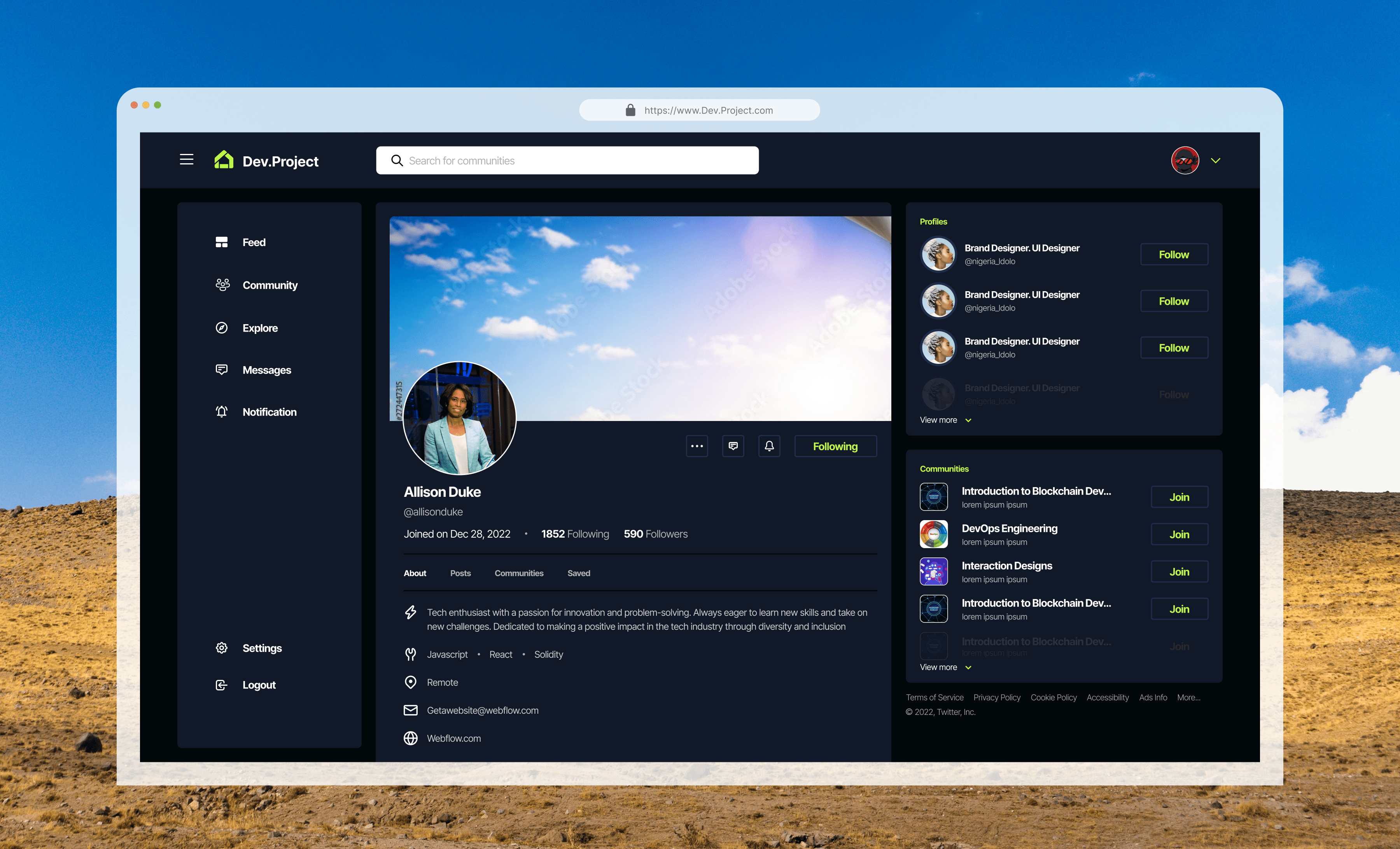
A developer profile needed to communicate more than a username.
I designed profiles around the things that could help another developer understand someone's identity and expertise, their background, posts, communities and saved content.
This created an identity that could work across both professional and community contexts.
Why? Developers often connect because of what someone knows or contributes, not simply because of who they are.



Developer identity can be both personal and professional, so users needed control over how they participated.
The privacy experience covered sessions, tagging, content preferences, mutes, blocks and who could contact the user. I treated these controls as part of the product experience.
Why? A social platform becomes more useful when users can control how visible, reachable and involved they want to be.


I deliberately kept the first concept focused instead of designing every possible developer interaction.
Features such as live coding, pair programming, video and AI interactions were left out. They were interesting opportunities, but they introduced significant technical complexity without proving that they solved the core problem.
The concept connected discovery, discussion, community and developer identity in one environment.
The product brought together behaviours currently spread across several platforms while keeping technical content at the centre.
But because this remained a concept, the most important question wasn't whether the interface worked. It was whether developers would actually change their existing behaviour to use it.
A strong product concept still needs a problem people care enough to change for.
The project taught me to separate an interesting product opportunity from a validated user need. The more features I imagined, the more important that distinction became.
Good product design is about what should and shouldn't be built at different timeframes and not only about making a large system coherent.
I wouldn't add more features. I'd find the highest-value behaviour first.
I'd recruit developers outside my immediate network and test the core experiences: discovery, communities and technical discussion.
From there, I'd identify the strongest use case, remove features that don't support it and validate whether the product solves a problem worth changing platforms for.