
Qweeka
Unifying everyday fiat payments and digital assets into one familiar experience for Nigerian users.
Product Design
Fintech
UX/UI
What if everyday banking and crypto could live in the same product?
Qweeka started as a client concept for a Nigerian financial product. When the original team stopped responding, I continued the idea as a personal design exploration.
The opportunity was to give users one place to manage everyday money while creating a simpler path into digital assets.
Spending crypto was often more complicated than owning it.
A user could move through a wallet, exchange, P2P platform and bank account before their digital money became useful for an everyday payment. I wanted to explore whether Qweeka could reduce that fragmentation without making banking feel like a crypto product.

How do you combine two financial worlds without combining their complexity?
Fiat banking and crypto may both deal with money, but users approach them differently. Someone paying a bill shouldn't need to understand wallets, tokens or on/off-ramping before completing a simple task.
One product. Two clear experiences.
Instead of placing fiat and crypto into one crowded dashboard, I separated them by user intent.
Fiat focused on everyday banking: transfers, top-ups and bills.
Crypto created a dedicated space for digital assets and future crypto functionality.
Users shouldn't have to understand crypto to use their bank account.
The separation keeps everyday financial tasks familiar while giving crypto functionality room to become more sophisticated.


Qweeka was designed to grow beyond a single dashboard.
I compared banking products including OPay, PalmPay, Kuda and Access Bank with crypto products such as Binance and Bybit.
The review focused on navigation, transaction flows, fees and information hierarchy, and I found patterns that helped shape two of Qweeka's key design principles.
Transaction Design: If users are moving money, they should never have to guess what they're paying. Some financial flows made fees and final amounts easy to miss.
For Qweeka, I surfaced the cost before confirmation so users could understand what they were sending, what they were paying and what would ultimately arrive.
Checkout flow
Amount + fees = Total
Confirmation
Progressive Disclosure: Complex information should arrive when users need it. Instead of showing everything upfront, I used progressive disclosure to reveal deeper information as the user moved through the experience.
Before
Progressive disclosure
Expanded state
Qweeka was designed to grow beyond a single dashboard.
I designed everyday financial tasks like transfers, top-ups, bills, airtime and data, then explored lifestyle services such as cinema tickets and flight booking.


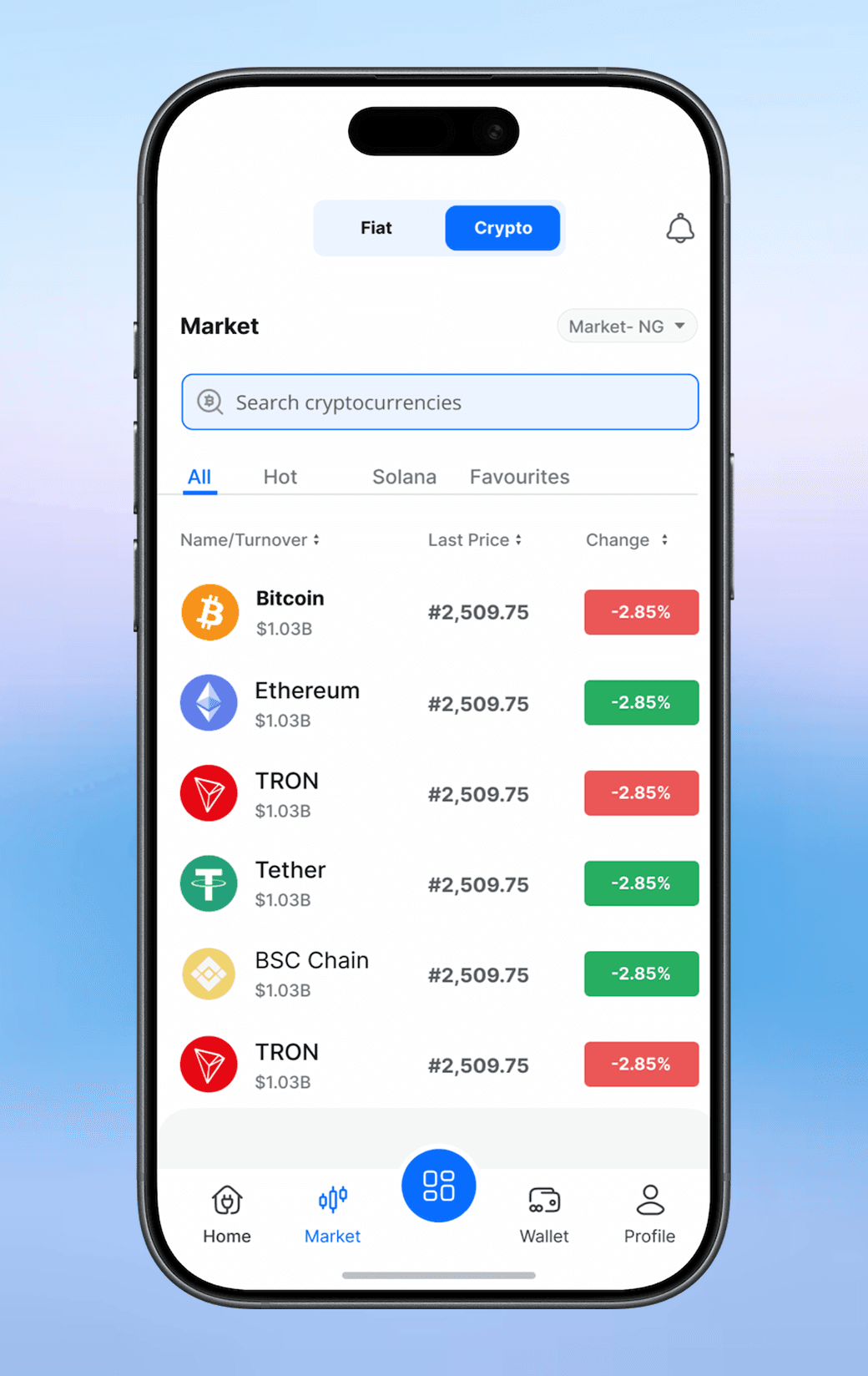


I deliberately stopped short of building live crypto trading.
The crypto side raised questions that interface design alone couldn't answer. Licensing, regulation, infrastructure and the Nigerian market would all influence what Qweeka could responsibly offer, so I treated trading as a future direction rather than designing around assumptions.
Qweeka became a clearer path between everyday banking and digital assets.
The concept established a familiar banking foundation while creating a separate path into crypto. The result was not a finished financial product, but a product direction built around clarity, transparency and progressive complexity.
In fintech, the interface is only part of the product.
Regulation, infrastructure and operational requirements can influence the product before a single screen is designed. Good fintech design isn't just about making the interface intuitive; it's about understanding what the system can responsibly support.
In future, I wouldn't redesign Qweeka first. I'd validate the assumptions.
I'd test whether users actually understand the Fiat/Crypto separation, whether transparent fees improve confidence, and how Nigerian users currently move between wallets, exchanges, P2P services and banks. The next step would be less about adding features and more about finding out which parts of the concept deserve to exist.